
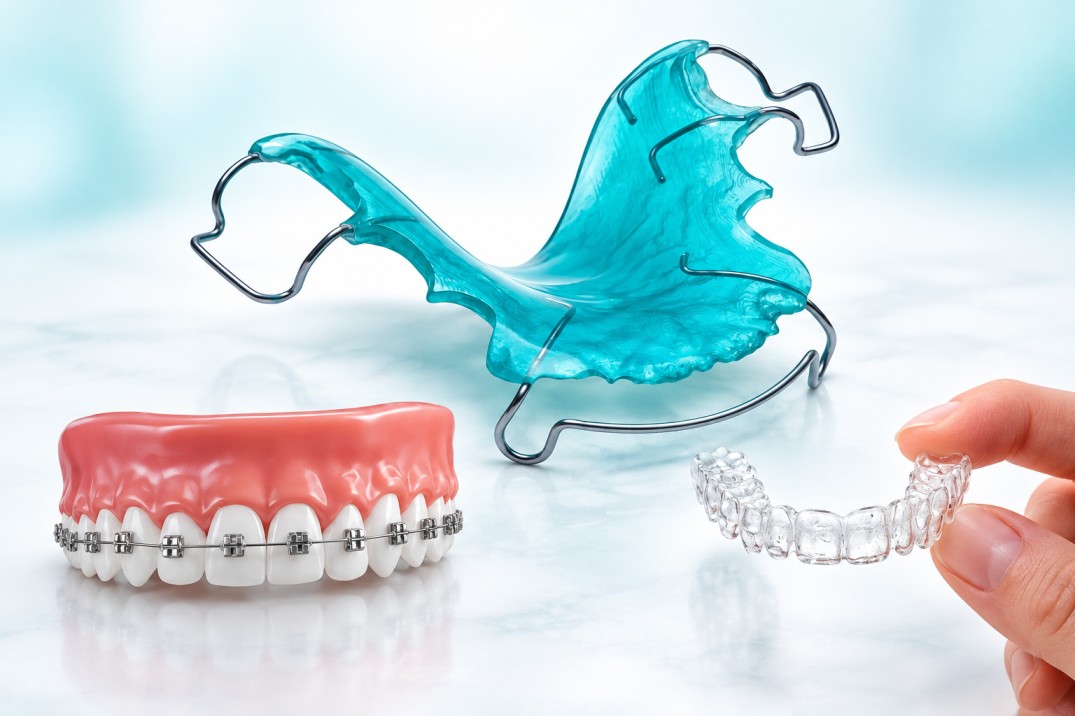
Months or years of orthodontic treatment can end with a single appointment, but the teeth do not stop being able to move on that day. Dental retainers are designed to hold teeth in their new positions while the surrounding tissues settle. This article explains how retainers after braces and retainers after aligners work, the main types available, and what to consider when planning long-term care.
Why Retainers Matter After Braces and Aligners
Teeth are held in the jaw by bone and a network of fine fibres. When braces or aligners move teeth, these tissues need time to adapt to the new positions. During this period, teeth may drift back towards where they started, and aging, habits and natural growth can also change tooth position over time.
This is the purpose of teeth retention after braces. An orthodontic retainer helps keep teeth stable while the supporting structures adjust. Results vary between individuals, and a dental professional can advise on what is appropriate for each person’s situation.
Consider a university student who finishes treatment before returning home for the holidays. If the retainer is left in a bag and forgotten, the teeth may begin to shift within months. Consistent retainer use is often the simplest way to protect the investment of time and money already made.
Types of Orthodontic Retainers
Retainers generally fall into two categories: fixed and removable. The right choice depends on the original treatment, the teeth involved and daily habits.
Fixed Retainers
A fixed retainer is a thin wire bonded to the back of the teeth, usually the lower front teeth and sometimes the upper. Because it stays in place, it requires no daily decision-making from the wearer.
- Suited to: people who may find it difficult to remember a removable device.
- Consideration: cleaning around the wire takes extra care, using floss threaders or interdental brushes.
- Consideration: the wire can occasionally loosen or break and should be checked at regular dental visits.
Removable Retainers
Removable retainers can be taken out for eating and cleaning. There are two common styles.
Clear retainers are made from transparent plastic that fits over the teeth. They are discreet, which many teenagers, corporate employees and people with public-facing jobs prefer. They resemble aligner trays, so they are a familiar step for those finishing treatment with clear aligners.
Hawley-style retainers combine a wire across the front teeth with an acrylic plate. They are durable and adjustable, though more noticeable than clear options.
Removable retainers only work when they are worn as directed. They should be kept in their case when not in use, as lost or damaged retainers are a common issue.
Retainers After Clear Aligners
A retainer after clear aligners is just as relevant as after traditional braces. Aligners move teeth gradually, and the new positions still need to be maintained once the final tray is complete. Many people who complete Clear Aligners in Brighton VIC move straight into clear retainers, which feel similar to the trays they have already worn.
Anyone considering orthodontic options may wish to ask about the retainer plan at the start, not the end, so the full journey is understood from the first consultation.
What a Retainer Plan May Involve
A retainer plan is individual, but it commonly includes the following:
- An initial period of more frequent wear, as advised by the dentist
- A gradual move to less frequent wear, if the dentist considers it suitable
- Regular check-ups to assess fit, wear and tooth position
- Replacement when a retainer becomes damaged, worn or no longer fits
Anyone who has completed Braces Treatment in Melbourne may be given instructions specific to their case, and those should be followed in preference to general guidance.
Looking After a Retainer
Good habits extend the life of a retainer and help keep it hygienic.
- Clean removable retainers daily with a soft brush and cool water, avoiding hot water, which can distort plastic.
- Store them in a case, never wrapped in a napkin or tissue.
- Keep them away from pets, which often chew them.
- Bring them to dental appointments so the fit can be checked.
Contact a dental professional promptly if a retainer cracks, loosens or stops fitting comfortably
Families with children and teenagers may find a simple routine helpful, such as placing the case beside the toothbrush. Visitors, expats and international students who are in the area temporarily may wish to carry spare care instructions and seek advice early if a retainer is damaged.
Also read this : Crooked Teeth? How Braces Treatment Can Help Your Smile
Choosing Where to Continue Care
Retainer care is ongoing, so convenience and continuity matter. A Dentist in Brighton VIC can review the fit of a retainer, check overall oral health and discuss whether adjustments are needed. A Cosmetic Dentist in Brighton VIC may also advise where appearance goals and tooth position are linked, while a local Dental Clinic in Melbourne can coordinate routine check-ups alongside retainer reviews.
Frequently Asked Questions
Q – How long should a retainer be worn?
A- This depends on the individual. A dentist can advise on a suitable schedule, which often changes over time.
Q – Can a retainer be replaced if it is lost?
A- Yes. Replacement is usually possible, and prompt action may help avoid unwanted tooth movement.
Q- Does a retainer replace the need for check-ups?
A – No. Regular check-ups allow the dentist to assess the retainer and the health of teeth and gums.
Next Steps
A retainer is a small device, yet it plays a significant part in maintaining the outcome of orthodontic care. Anyone who has recently finished braces or aligners, or whose retainer no longer fits well, is encouraged to seek an assessment. Searching for a Dental Clinic near me is a practical starting point, and the team at Jolique can discuss retainer options suited to individual needs.
Visit jolique.com.au to book a braces Treatment consultation at Jolique and take the first step toward understanding your restorative options with the support of Brighton’s experienced dental team.
Book Your Dental Check-Up
📞 If you are experiencing a Braces Treatment in Melbourne, contact Jolique on (03) 9647 2650 or visit jolique.com.au We will do our best to see you as soon as possible.
Disclaimer: This article is for general informational purposes only and does not constitute dental advice. Individual outcomes vary. Please consult a qualified dental practitioner at Jolique for advice tailored to your specific oral health needs.