
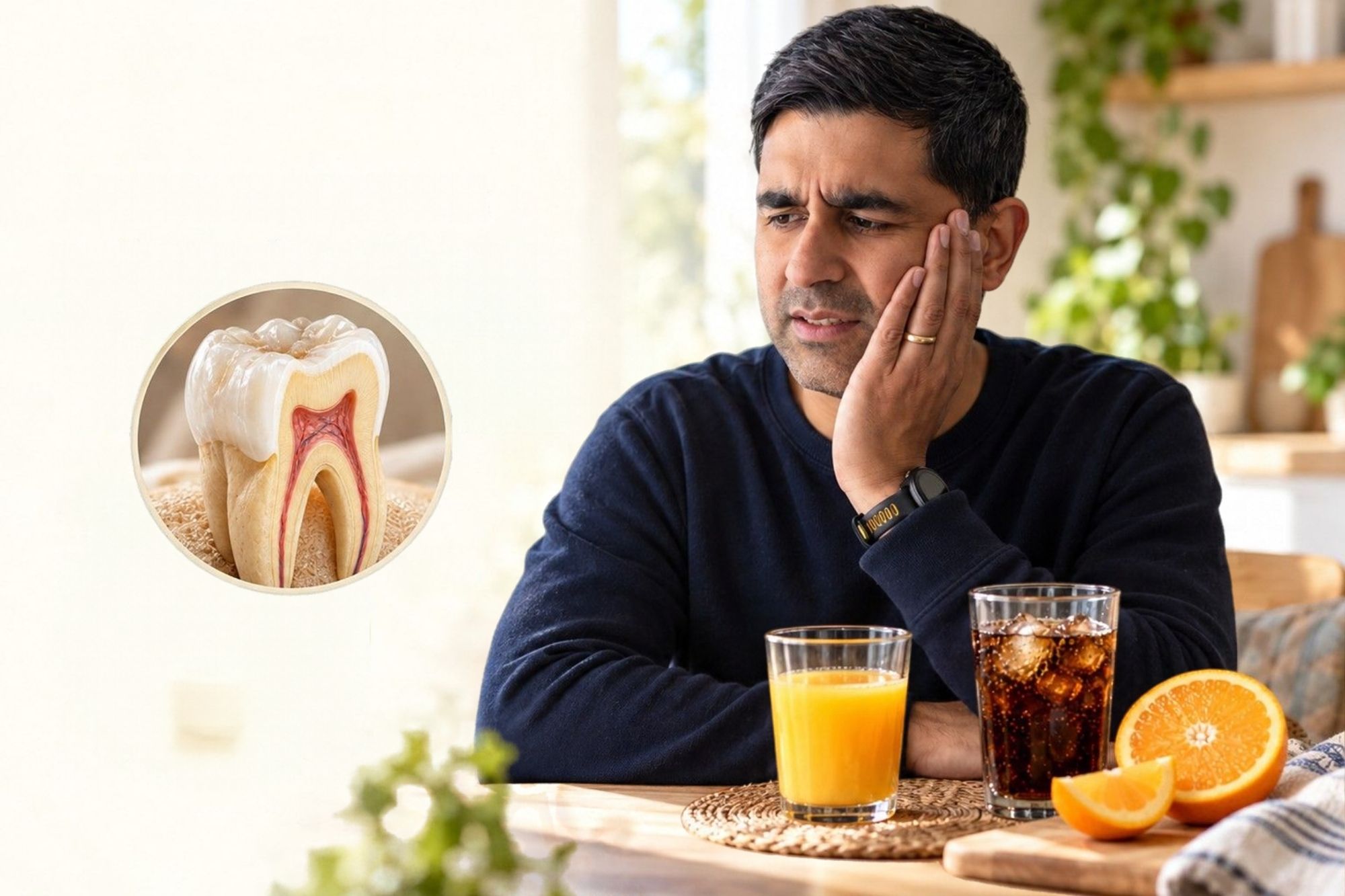
A morning lemon water, an afternoon energy drink and a sports drink after training can all seem harmless. Over time, however, frequent exposure to acidic foods and drinks may gradually wear down the outer layer of the teeth. This article explains how acidic foods and teeth interact, which everyday items are commonly involved, and what practical steps may help reduce the risk of tooth enamel erosion.
What Is Tooth Enamel Erosion?
Enamel is the hard, protective outer surface of each tooth. It shields the softer layers beneath from temperature, pressure and everyday wear. Because enamel contains no living cells, it cannot regenerate once it has been lost.
Tooth enamel erosion occurs when acid dissolves the mineral content of enamel. Unlike decay, which is driven by bacteria, dental erosion can occur from acid alone. Each acid exposure softens the surface slightly, and repeated exposure may lead to gradual enamel wear.
Common Acidic Foods and Drinks
Many everyday items are acidic, and some are part of an otherwise healthy diet. The concern is generally frequency and duration of exposure rather than any single item.
Drinks commonly associated with erosion
- Soft drinks, including sugar-free varieties.
- Energy and sports drinks.
- Fruit juices and cordials.
- Wine and some other alcoholic drinks.
- Flavoured sparkling waters.
Foods that may affect enamel
- Citrus fruits such as lemons, limes and oranges.
- Vinegar-based dressings and pickled foods.
- Tomato-based sauces.
Sour lollies and acidic confectionery.
Acidic drinks and teeth are a particular concern when drinks are sipped slowly over several hours, because the mouth remains acidic for longer.
Who May Be More Exposed?
Everyday routines can influence how often teeth meet acid. The following examples are illustrative only.
- Teenagers and students who regularly drink energy or sports drinks during study or sport.
- Corporate employees and shift workers who sip coffee, soft drink or flavoured beverages across long working days.
- Families with young children, where juice and cordial may be offered between meals.
- Older adults, particularly where certain medications reduce saliva flow, as saliva helps neutralise acid.
- Tourists and expats adjusting to new diets or drinking more wine or citrus-based drinks.
Acid can also come from inside the body. Conditions such as acid reflux may expose teeth to stomach acid, and a dental professional can advise whether this is relevant in an individual case.
Signs of Acid Erosion on Teeth
Early changes can be subtle and are often noticed during a routine check-up before a person notices anything. Possible signs include:
- Increased sensitivity to hot, cold or sweet foods
- Teeth that appear more yellow, as the layer beneath becomes more visible
- Edges that look thin, smooth or slightly translucent
- Small dents or rounded surfaces on biting areas
- Rough or uneven tooth edges
These signs can have several causes, so a professional assessment is the reliable way to understand what is happening.
How to Help Prevent Enamel Erosion
Most people do not need to eliminate acidic foods entirely. Small adjustments to habits may help reduce the risk.
- Limit sipping. Finishing a drink in one sitting is generally preferable to sipping over hours.
- Use a straw for acidic drinks where practical, to reduce contact with the front teeth.
- Rinse with water after consuming acidic foods or drinks.
- Wait before brushing. Enamel is softer immediately after acid exposure, so dentists commonly suggest waiting a while before brushing.
- Choose fluoride toothpaste, which supports enamel as part of a daily routine.
- Pair acidic foods with meals, as increased saliva during eating helps buffer acid.
- sugar-free chewing gum, which can stimulate saliva flow.
Water remains the simplest choice between meals. Families may find it helpful to keep juice and cordial for mealtimes rather than all-day drinking.
Also read this : Tooth Enamel Defects: Causes, Effects & Treatment
When to See a Dentist
Early assessment allows options to be discussed before changes progress. A General Dentist in Brighton VIC can examine the teeth for signs of wear, review diet and habits, and recommend preventive measures suited to the individual. Regular check-ups with a General Dentist in Brighton VIC also help monitor changes over time.
Where wear has affected the look of the teeth, a Cosmetic Dentist in Melbourne may discuss suitable options after a thorough examination. The suitability of any treatment depends on individual circumstances, and all treatments carry risks.
Many people also find it convenient to build a relationship with a local Dental Clinic in Melbourne for both routine and ongoing care, particularly families who prefer one clinic for multiple members.
Frequently Asked Questions
Are sugar-free drinks safe for enamel?
Not necessarily. Many sugar-free drinks are still acidic, so frequency of consumption remains relevant.
Can enamel grow back?
No. Once lost, enamel does not regenerate, which is why prevention and early assessment are emphasised.
Should acidic foods be avoided completely?
Generally not. Many acidic foods are part of a balanced diet, and moderating how often teeth are exposed is usually more practical.
Take the Next Step
Protecting enamel starts with understanding daily habits and having them reviewed by a professional. Anyone noticing sensitivity or changes in the appearance of their teeth is encouraged to book an assessment. Searching for a Dental Clinic near me is a practical starting point, and the team at Jolique can discuss preventive care suited to each person’s needs.
Visit jolique.com.au to book a Cosmetic Dentist consultation at Jolique and take the first step toward understanding your restorative options with the support of Brighton’s experienced dental team.
Book Your Dental Check-Up
📞 If you are experiencing a Cosmetic Dentist in Melbourne, contact Jolique on (03) 9647 2650 or visit jolique.com.au We will do our best to see you as soon as possible.
Disclaimer: This article is for general informational purposes only and does not constitute dental advice. Individual outcomes vary. Please consult a qualified dental practitioner at Jolique for advice tailored to your specific oral health needs.